
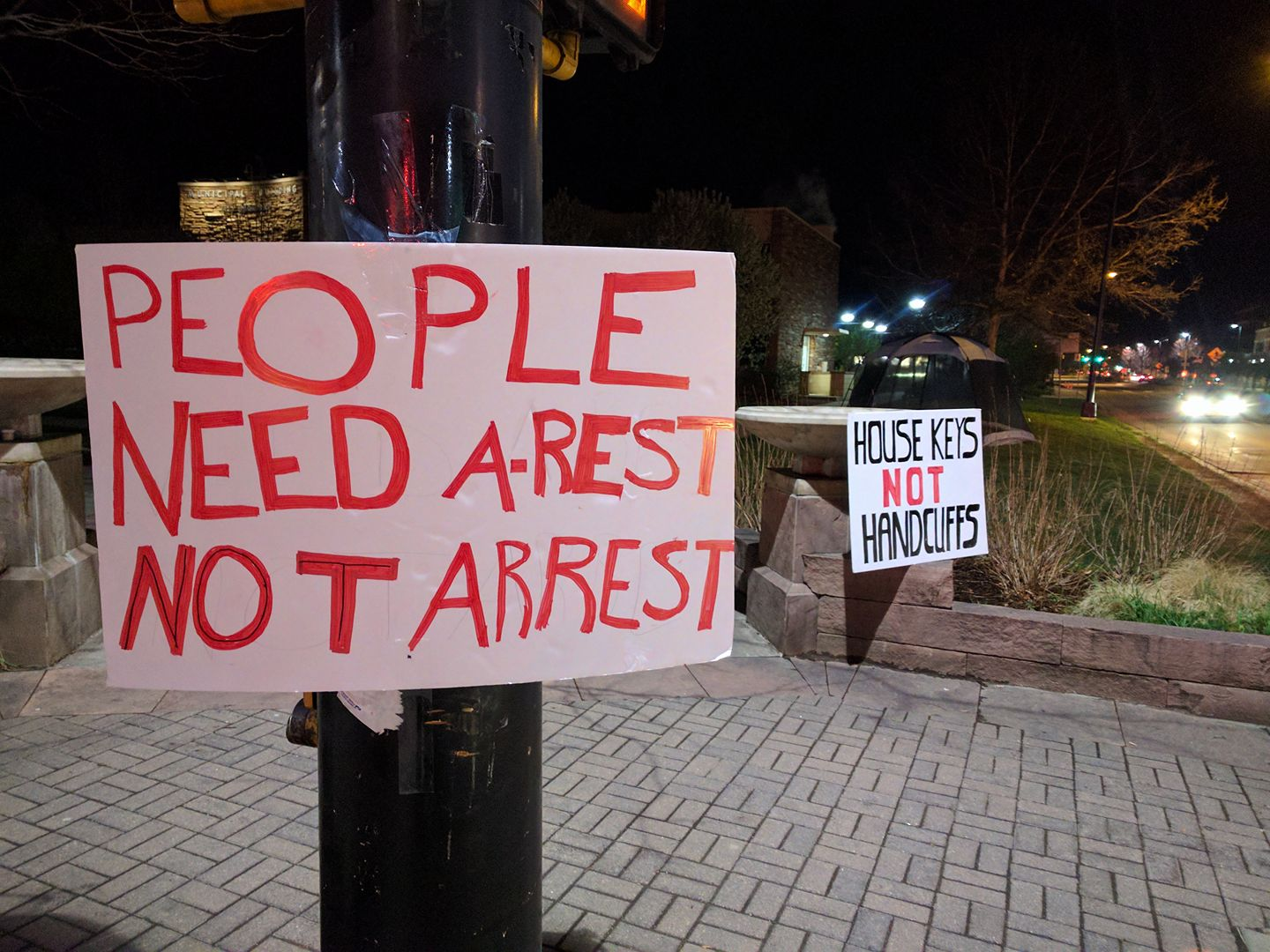
The Criminalization of Homelessness
The criminalization of homelessness refers to measures that prohibit life-sustaining activities such as sleeping/camping, eating, sitting, and/or asking for money/resources in public spaces. These ordinances include criminal penalties for violations of these acts. Some criminalization measures include:
- Carrying out sweeps: confiscating personal property including tents, bedding, papers, clothing, medications, etc.
- Making panhandling illegal.
- Making it illegal for groups to share food with homeless persons in public spaces.
- Enforcing a “quality of life” ordinance relating to public activity and hygiene.

Related topics:
- Alternatives to Criminalization
- Hate Crimes Against People Experiencing Homelessness
- “You Don’t Need a Home to Vote” Campaign
Other Resources
- Model policy solutions from the Housing Not Handcuffs Campaign
- How to set up and run Legal Defense Clinics from the Western Regional Advocacy Project
- Tools for stopping street harassment
- ProPublica’s Encampment Removal Survey
How Criminalization Makes Homelessness Worse
A criminal record adds to the already difficult situation of finding employment, getting housing, or being eligible for certain services. Fines and criminal records provide barriers to becoming re-housed and finding employment, while simultaneously failing to increase access to services, and undermine the impact of service providers.
There is a clear moral issue with punishing someone for carrying out life-sustaining activities in public when there are no alternatives. People who are already suffering are being punished further for suffering.
Additionally, the criminalization of homelessness is aimed at the visual ramifications of homelessness, not the root causes. Not only does it fail to address the underlying causes, but it further undermines the challenges of homelessness.

